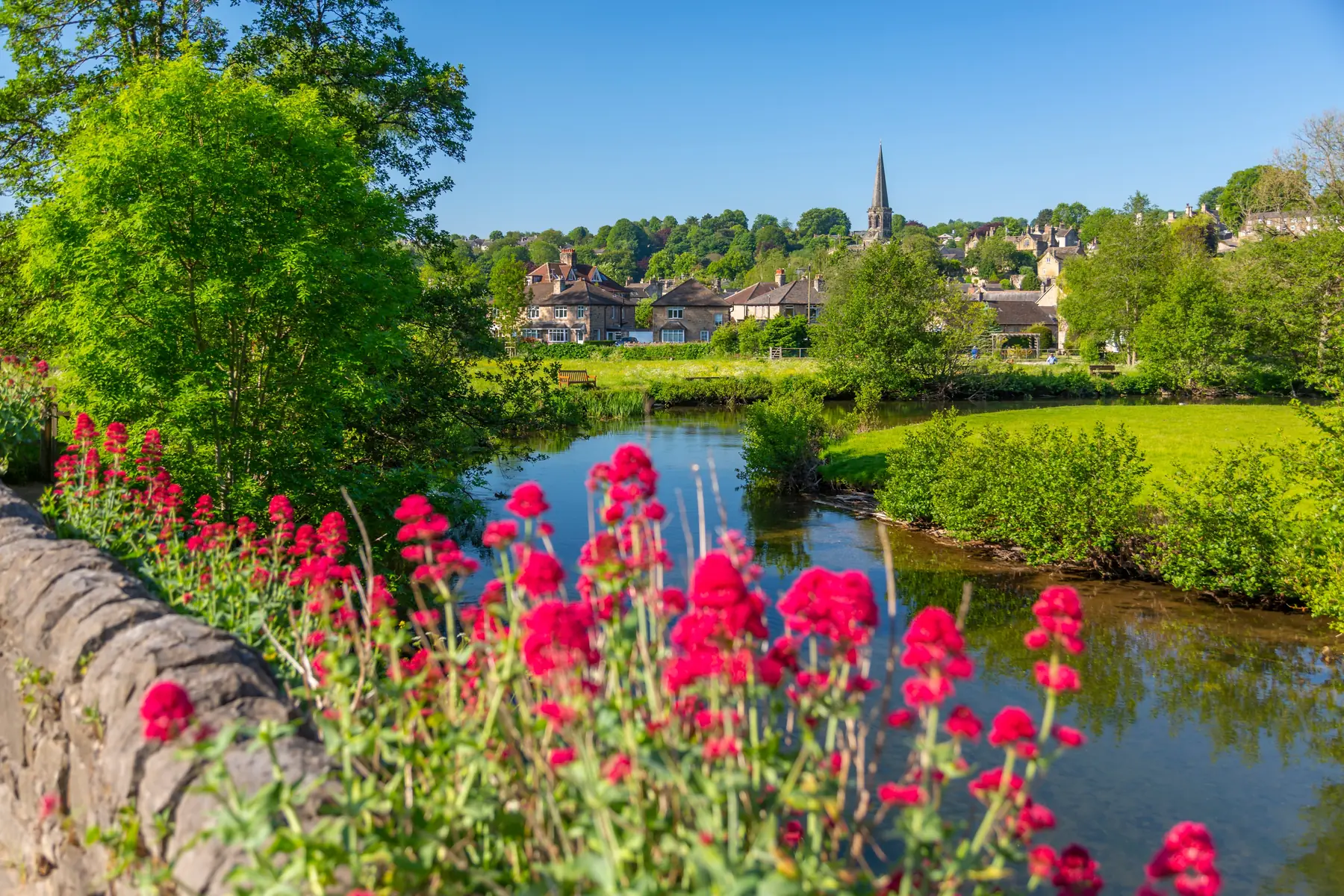
The Peak District gets a great deal of rain and Bakewell, sitting in the Wye valley between two sets of hills, gets its share. The compensation is that this is a landscape stuffed with roofs: two of the great houses of England within five kilometres, a scatter of show caverns in the limestone, museums in half the surrounding villages, and a market town with enough tea rooms to see out a downpour several times over.
There is also an argument for going out anyway, which this guide comes to at the end.
A sixteenth-century yeoman’s house on a lane above the church, kept as a local museum. It is small, the entry price is modest, and visitors consistently mention how helpful the volunteers are. You see the structure of a Tudor building with the workings exposed, plus collections on the town’s history. An hour, and the best-value indoor thing in Bakewell. See the Old House Museum page.
Free, open and considerably more interesting than most parish churches: a Saxon cross in the churchyard, an extraordinary collection of carved Anglo-Saxon and Norman stones gathered in the porch, and monuments to the Vernon and Manners families of Haddon.
Bakewell’s centre is compact and largely under cover if you plan your route through it. The Monday market is the big one — a general market in the town and a working livestock market at the Agricultural Business Centre — and it goes ahead in any weather. The visitor centre is in the Old Market Hall on Bridge Street, itself a fine seventeenth-century building.
And then there are the pudding shops, which are the reason many people come to Bakewell in the first place. Our pudding and tart guide explains the difference and where to settle the argument.
Four and a half kilometres north-east, and the obvious wet-day destination. The house is enormous, the state rooms and the sculpture gallery take hours, and the whole visit is indoors apart from the walk from the car park. The garden is worth doing in rain too — the cascade and the Emperor Fountain are improved by it — and there is a substantial restaurant and farm shop. In late autumn and winter the house is dressed for Christmas, which is a considerable production.
Three kilometres south. Smaller, older, less restored and to many people more atmospheric: a medieval and Tudor manor house with a great hall, a long gallery, a chapel with medieval wall paintings and a courtyard that has appeared in a great many films. The gardens are terraced down to the Wye. It opens seasonally, so check before setting out, and note that some of the visit is outdoors between buildings.
The Peak District’s limestone is riddled with caves, and going into one is the region’s traditional answer to bad weather.
Speedwell Cavern at Castleton, around twenty-five kilometres north-west, takes visitors underground by boat along a flooded eighteenth-century lead mining level to a vast natural cavern. Castleton also has Peak Cavern, Treak Cliff and the Blue John Cavern, where the local Blue John stone is still mined.
The Great Masson Cavern and the caverns at the Heights of Abraham above Matlock Bath, thirteen kilometres south, are reached by cable car over the Derwent gorge — the cable car being one of the few enclosed cable cars in Britain and a fine thing to be in when it is raining on the valley below.
Eyam Museum, eight kilometres north, tells the story of the village that isolated itself in 1665 to stop the plague spreading, at a cost of a large part of its population. It is a genuinely moving small museum, and Eyam Hall and the Riley Graves are on the same visit.
Cromford Mills, fourteen kilometres south, is Arkwright’s first water-powered cotton mill and the birthplace of the factory system — a UNESCO World Heritage Site with exhibitions, shops and cafés under cover.
Matlock Bath is the strangest of them: a Victorian spa resort several hundred miles from the sea that has spent a century pretending to be a seaside town, complete with an aquarium, amusement arcades and fish and chips along the river. On a wet afternoon it is exactly the right kind of absurd.
Two Bakewell walks work in rain better than in sunshine.
The Monsal Trail is the obvious one: surfaced, level, and passing through four lit tunnels, each several hundred metres long, which are dry by definition. Walking or cycling the trail in rain is genuinely pleasant, and the Headstone Viaduct with cloud in the valley is a better sight than the postcard version.
Chatsworth Park is free, open and enormous, and mud is not really a factor on the main paths along the Derwent.
What to avoid: the dales. Lathkill Dale gets slippery, and Chee Dale’s stepping stones become impassable when the Wye is high — the path there runs along the base of a cliff on stones set in the river, and people do get caught out. Check the river before you commit.
Parking fills faster in bad weather, not slower, because everyone comes into the town. The Recreation Ground and the old station car park are the largest.
Buses run frequently from Sheffield, Chesterfield, Derby and Matlock and stop around The Square; several pass Chatsworth, which means you can do the house without driving.
Opening seasons matter here. Haddon Hall and several of the smaller attractions close or reduce hours out of season, and a wet Tuesday in February is exactly when you will find out. Check before you drive.
The Peak District sits between Manchester and Sheffield and catches weather coming from either side, and rain in the valleys can mean something quite different up on the moors. Two practical consequences for a wet day in Bakewell.
First, the White Peak dales stay usable in weather that closes the moors. Lathkill and Monsal Dale are sheltered, low and wooded, and a walk down there in drizzle is a fair proposition when Kinder Scout and Bleaklow are not.
Second, rivers respond fast. The Wye and the Lathkill rise quickly after sustained rain, and the sections of path that run along the water — Chee Dale above all — go from adventurous to impassable within hours. If it has been raining for a day, assume the stepping stones are under water.
Bakewell is a good town for waiting out a shower. The Old Market Hall houses the visitor centre; The Square and Matlock Street between them hold most of the tea rooms; and the pubs — the Rutland Arms, the Castle, the Manners — all have proper rooms with fires rather than open-plan barns. An hour with a pudding and a pot of tea is not a wasted hour, and the weather here rarely settles in for the whole day.
The one thing that spoils a Peak District wet day is driving somewhere that turns out to be shut. Haddon Hall opens seasonally and closes for parts of the winter. Several of the caverns reduce hours out of season, and one or two close entirely. Eyam Museum and the smaller village museums keep short hours. Chatsworth, by contrast, has become close to a year-round operation and is at its most theatrical in the run-up to Christmas.
The rule is simple: check opening before you set out, particularly between November and March and particularly midweek. It is the difference between a good wet day and an hour in a car park.
The Old House Museum, All Saints Church, the market and the tea rooms in town; Chatsworth, Haddon Hall and the show caverns within half an hour.
Very. The house alone is several hours indoors, and the garden’s water features are better wet.
Yes. They are surfaced, lit and open through the day, which makes the trail a reliable wet-weather walk or ride.
The Heights of Abraham and Great Masson Cavern at Matlock Bath, about thirteen kilometres south; the Castleton caverns are a little further north-west.
The Monday market is a fixture and goes ahead year-round.